Our Gallery
Images related to health & medical
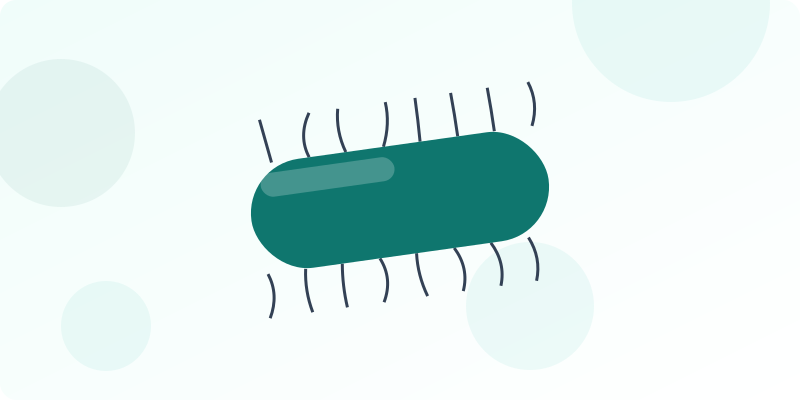
Transmission electron microscopy (TEM) image of Escherichia coli showing type 1 fimbriae extending from the bacterial surface, with the FimH tip adhesin visible at higher magnification.
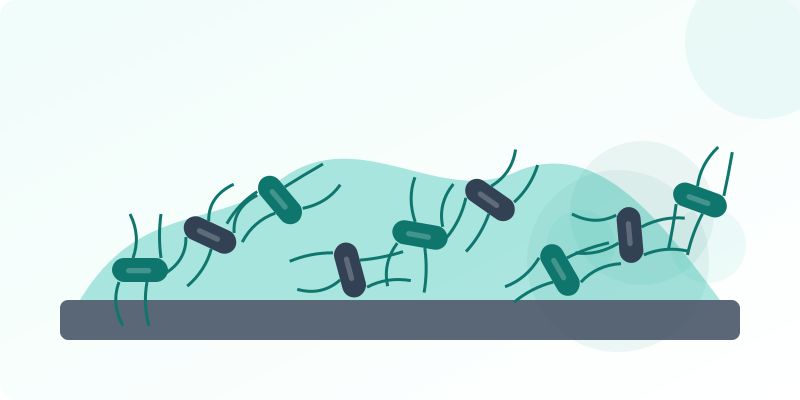
Confocal fluorescence microscopy of a Staphylococcus aureus biofilm stained with SYTO9 (live cells, green) and propidium iodide (dead cells, red), showing three-dimensional tower and mushroom structures.
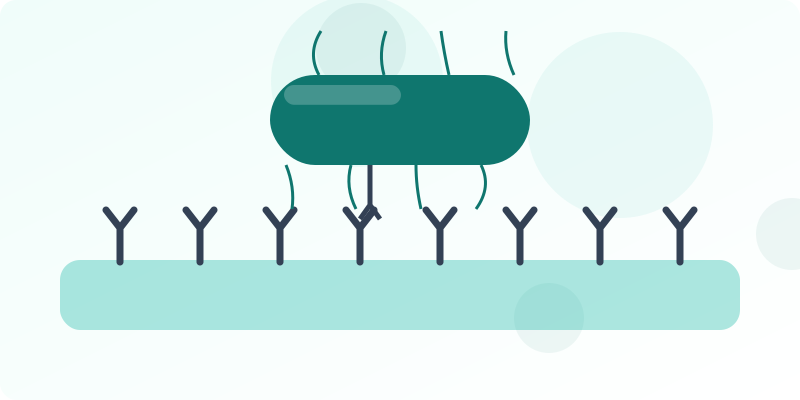
Crystal structure visualization of the FimH lectin domain bound to a mannoside ligand (PDB 4X5P), showing the binding pocket residues Asp140, Asn135, and Tyr48 that form the mannose recognition site.

Scanning electron microscopy image of bladder epithelial cells (urothelium) colonized by uropathogenic E. coli, demonstrating intimate attachment at the bacterial-host cell interface mediated by FimH adhesin.

Glycan microarray binding assay results showing differential binding of Streptococcus pneumoniae BgaA adhesin to sialylated glycan structures, with heat map visualization of binding intensity across 600+ glycan targets.

Chaperone-usher pilus assembly pathway schematic showing pilin export through Sec translocon, chaperone (FimC) binding in the periplasm, and ordered delivery to the usher (FimD) outer membrane pore.
Western blot and ELISA data comparing MSCRAMM surface expression in clinical S. aureus isolates from bloodstream infections versus nasal colonization samples, showing virulence-associated adhesin upregulation.
Atomic force microscopy (AFM) force spectroscopy measurement of single FimH-mannose unbinding forces under shear flow conditions, demonstrating the catch-bond behavior that strengthens binding under flow stress.
Biofilm crystal violet staining assay comparing wild-type and fim deletion mutant E. coli strains, quantifying the contribution of type 1 fimbriae to static biofilm formation on polystyrene surfaces.